
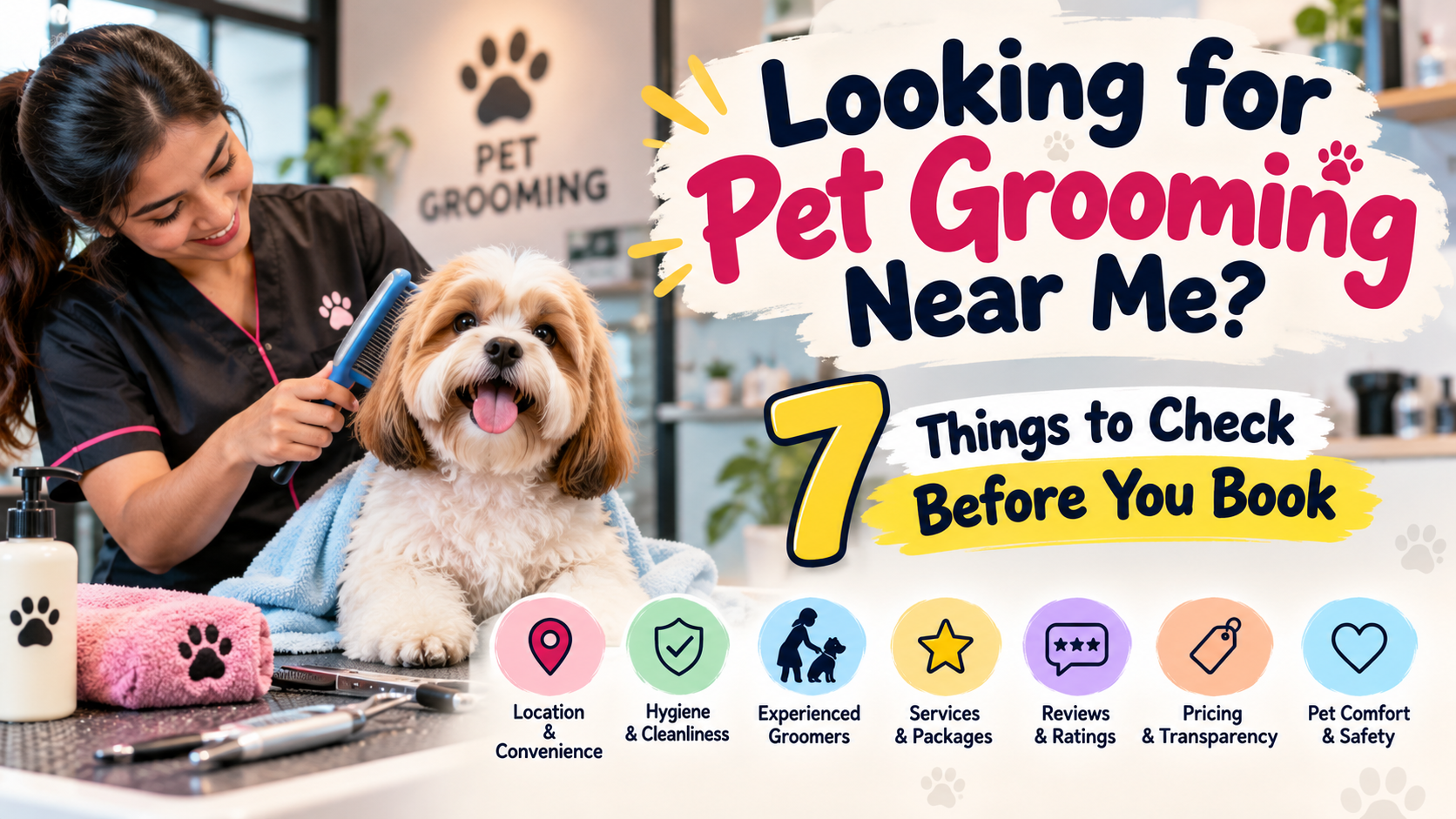
Looking for Pet Grooming Near Me? 7 Things to Check Before You Book
Typing “pet grooming near me” into a search bar takes five seconds. Choosing the right groomer from the results takes a bit more thought.
A groomer isn’t just giving your pet a haircut. They’re handling your dog or cat with clippers, dryers, and water, often while the animal is nervous. A great groomer leaves your pet clean, calm, and comfortable. A careless one can leave them stressed, nicked, or even injured.
The good news is that you can spot the difference before you book. Here are seven things to check.
Key Takeaways
- Check the groomer’s training, hygiene, and handling methods before you check the price.
- Visit the salon or ask for a video tour. A clean, calm space says a lot.
- Ask what’s included in the quote so there are no surprise add-on charges.
- Trust your pet’s reaction. A good groomer makes the first visit gentle.
1. Does the Groomer Have Real Training and Experience?
Look for a groomer who can tell you where they trained and how long they’ve worked with your pet’s breed or coat type. Formal grooming courses, apprenticeships, or pet first-aid certification are all good signs. Experience matters most when your pet has a tricky coat, like a matted double coat, or a special need, like being a senior or a nervous rescue.
Don’t be shy about asking. A confident groomer will happily explain their background. If answers are vague or they seem annoyed by the question, move on.
What to ask:
- How long have you been grooming professionally?
- Have you groomed my pet’s breed before?
- Do you have pet first-aid training?
2. Is the Salon Clean and Well Run?
Hygiene is non-negotiable. Tools should be cleaned between pets, tables and tubs should be sanitized, and the space shouldn’t smell strongly of urine or wet fur. Dryers, clippers, and blades should look well maintained.
If you can, drop by before booking. Many good salons are happy to show you around, and some will share photos or a short video tour. Look for separate areas for dogs and cats, since cats get stressed fast around barking.
Ask one more thing: does the groomer use clean towels and fresh water for every pet? It sounds basic, but it protects your pet from skin infections and parasites that spread easily in shared spaces.
3. How Do They Handle Nervous or Difficult Pets?
This is the check that matters most. Every pet has a limit, and how a groomer reacts when your pet hits it tells you everything.
A good groomer uses patience, breaks, and positive reinforcement. They don’t use force, harsh restraints, or leave pets tied up on a table unattended. Ask directly: “What do you do if my dog gets scared or snaps?”
Good answers sound like: “We slow down, give a break, and sometimes finish in a second session.” Red-flag answers sound like: “We just muzzle and power through.”
If your pet is anxious, say so when you book. A groomer who asks follow-up questions about your pet’s triggers is one worth keeping.
4. Will Your Pet Be Supervised the Whole Time?
Some salons keep pets in crates for hours between steps. Others work one-on-one from start to finish. Neither is automatically bad, but you should know which you’re getting.
Ask these questions:
- Will someone be with my pet during drying?
- How long will my pet wait in a crate, if at all?
- Do you use cage dryers, and if so, are they monitored?
Drying is the stage where most grooming accidents happen, especially for short-nosed breeds like pugs and bulldogs, which overheat easily. A groomer who watches every dryer session is protecting your pet’s safety.
5. What’s Actually Included in the Price?
Prices vary widely by city, pet size, coat type, and service. Instead of comparing the headline number, compare what’s inside it.
A basic package often covers a bath, blow-dry, brush-out, nail trim, and ear cleaning. A full groom adds a haircut or breed-specific styling. Extras like de-shedding, teeth brushing, flea treatment, or de-matting may cost more.
Ask for a written or messaged quote that lists exactly what’s included. Also ask whether heavily matted coats, large sizes, or difficult behavior add a surcharge. A fair groomer tells you upfront, not at the counter.
Cheapest isn’t always best, and the most expensive isn’t always better either. You’re paying for time, skill, and care.
6. What Do Real Customers Say?
Reviews are useful, but read them the right way. Skip the star rating at first and look for patterns. Do several people mention a gentle groomer, on-time pickups, or pets coming home calm? Or do you see repeated mentions of cuts, skin irritation, or pets returning stressed?
Pay extra attention to how the owner replies to bad reviews. A professional response that takes responsibility is a better sign than defensive replies or no reply at all.
Local word of mouth helps too. Ask neighbors, your vet, or fellow dog owners at the park. Recommendations from people with pets like yours are usually more reliable than any online rating.
7. How Does Your Pet React on the First Visit?
Even a perfect-on-paper groomer might not suit your particular pet. So treat your first appointment as a trial.
Consider booking a short session first, like a bath and nail trim, rather than a full groom. Watch how your pet behaves when you drop them off and when you pick them up. A pet who comes home tired but relaxed is a good sign. A pet who is hiding, shaking, or suddenly afraid of the car is not.
Check your pet’s skin, ears, and paws at home afterward. Look for redness, nicks, or irritation, and don’t hesitate to raise any concern with the groomer. A good one will want to know.
Quick Pre-Booking Checklist
Before you confirm, make sure you can say yes to most of these:
- The groomer has relevant training and experience
- The salon is clean and well organized
- They’re open about how they handle nervous pets
- Your pet will be supervised, especially during drying
- You have a clear, itemized quote
- Reviews and local recommendations look consistent
- You’re starting with a short trial visit
Frequently Asked Questions
How do I find a good pet groomer near me?
Start with a map search and local recommendations from your vet or neighbors. Shortlist two or three groomers, then compare their training, hygiene, handling methods, and quotes. A quick call or visit usually tells you more than a website does.
How often should I take my pet to a groomer?
It depends on coat type and lifestyle. Many dogs do well with a groom every four to eight weeks, while short-coated pets may need less. Long-haired or curly breeds often need more frequent visits to prevent matting. Your groomer or vet can suggest a schedule.
Is mobile grooming better than a salon?
Mobile grooming can be calmer for anxious pets because there’s no crate time or other animals around. Salons often cost less and have more equipment. Both can work well. The right choice depends on your pet’s temperament and your budget.
What should I tell the groomer before the appointment?
Share your pet’s age, health conditions, allergies, past grooming experiences, and any fear triggers. Mention if your pet has bitten or snapped before. The more the groomer knows, the safer and smoother the visit will be.
Final Thoughts
Finding a good “pet grooming near me” result is less about who ranks first on the map and more about who treats your pet well. Check their training, hygiene, and handling. Get a clear quote. Start small. And above all, watch how your pet responds.
A great groomer becomes a long-term partner in your pet’s health and comfort. Take the time to choose well, and your pet will thank you with a wagging tail on the next visit.