
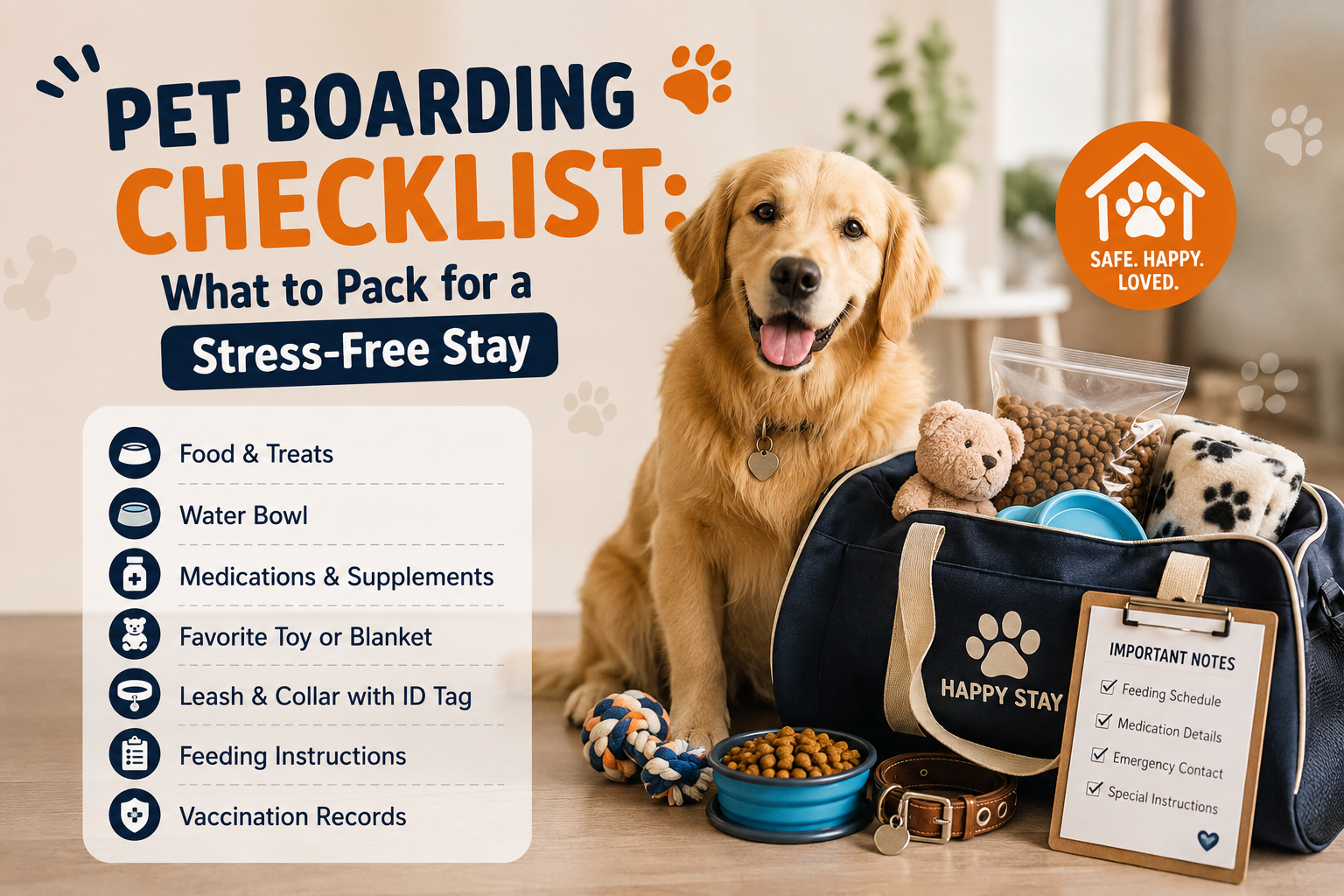
Pet Boarding Checklist: What to Pack for a Stress-Free Stay
Dropping your dog or cat off at a pet boarding facility can feel like sending a kid to summer camp for the first time — exciting, but a little nerve-wracking. The good news is that most of the anxiety (yours and your pet's) can be avoided with the right preparation. A well-packed bag doesn't just make your pet more comfortable; it also helps the boarding staff care for them exactly the way you would at home.
Whether this is your first time using a pet boarding service or you're a seasoned pro, this checklist covers everything you need to pack, plus a few things people often forget.
Why Packing Right Matters for Pet Boarding
Pet boarding facilities care for dozens of animals at once, each with different diets, medications, and quirks. The more information and supplies you provide, the easier it is for staff to keep your pet's routine consistent. Consistency reduces stress for your pet, which in turn reduces the chances of appetite loss, anxiety-related accidents, or behavioral issues during their stay. Think of your packing list as a communication tool as much as a supply kit.
Food and Feeding Supplies
Sudden diet changes are one of the most common causes of upset stomachs in boarded pets, so don't assume the facility's food will match what your pet eats at home.
- Pre-portioned meals for each day of the stay, plus one or two extra in case of an unexpected extension.
- Your pet's regular food brand — even if the facility offers house food, sticking to a familiar diet prevents digestive issues.
- Treats your pet already knows and likes, useful for staff to build trust quickly.
- Feeding instructions written down, including exact amounts, times, and any food allergies or sensitivities.
- A collapsible bowl or their own bowls, if your pet is picky about eating from unfamiliar dishes.
Medications and Health Information
If your pet takes any medication, this is the most important part of your pet boarding checklist to get right.
- Medications in original packaging, labeled with dosage and timing instructions.
- A written medication schedule, including what to do if a dose is missed.
- Copies of vaccination records — most boarding facilities require proof of rabies, Bordetella, and other core vaccines before check-in.
- Your vet's contact information and a backup emergency contact.
- Any special medical conditions noted clearly, such as seizures, arthritis, or anxiety disorders.
It's worth calling ahead to confirm exactly what documentation the facility requires, since policies vary widely.
Comfort Items From Home
Familiar smells go a long way toward helping a pet settle into a new environment.
- A blanket, bed, or towel that smells like home.
- One or two favorite toys — not the whole toy box, since space is often limited and shared spaces can lead to lost items.
- A worn t-shirt or item of your clothing, which many dogs and cats find calming.
- A favorite chew or puzzle toy, if allowed, to keep them mentally occupied.
Avoid packing anything irreplaceable or expensive. Boarding environments are busy, and items do occasionally get misplaced or damaged.
Leash, Collar, and Identification
Even if the facility provides its own leashes for walks, your pet should always travel with proper identification.
- A collar with an ID tag that includes your current phone number.
- A sturdy leash, especially if your dog pulls or has specific handling needs.
- A harness, if your pet is used to walking in one rather than a collar.
- Proof of microchip registration, in case identification tags are lost during the stay.
Bedding and Crate (If Needed)
Some pet boarding facilities allow you to bring a crate, especially for smaller dogs or cats who feel safer in an enclosed space.
- A crate or carrier, clearly labeled with your name and contact information.
- Extra bedding in case the first set needs washing.
- Puppy pads, if your pet is still house-training or has occasional accidents.
Grooming and Cleanup Supplies
Depending on the length of the stay and your pet's needs, a few grooming items can help maintain their routine.
- Brush or comb, especially for long-haired breeds prone to matting.
- Any specific shampoo, if your pet has skin sensitivities and might need a bath during a longer stay.
- Wipes for quick cleanups after walks or play sessions.
A Written Care Sheet
This is the item people forget most often, and it's arguably the most valuable. A simple one-page care sheet should include:
- Feeding schedule and amounts
- Medication instructions
- Behavioral quirks (fear of thunder, reactivity to other animals, favorite games)
- Bathroom habits and any accident history
- Emergency contacts, including a neighbor or friend if you're unreachable
Handing this to staff at check-in even if you've already discussed it verbally ensures nothing gets lost between shift changes.
Things You Don't Need to Pack
Overpacking can be just as problematic as underpacking. Most pet boarding facilities already supply:
- Bowls and basic bedding (unless your pet has specific comfort needs)
- Standard toys for playtime
- Cleaning supplies
- Basic first aid
Check with your chosen facility beforehand so you're not duplicating supplies unnecessarily.
Final Tips Before Drop-Off
- Label everything. Bags, bowls, blankets, and medications should all have your pet's name on them.
- Confirm pickup and drop-off times in advance to avoid last-minute stress.
- Do a trial run with a shorter stay first if your pet has never been boarded before.
- Update vaccination records at least a week ahead, since some vaccines need time to take effect.
- Stay calm during drop-off — pets pick up on your energy, and a relaxed goodbye helps them settle faster.
Wrapping Up
A thoughtful pet boarding checklist takes the guesswork out of your pet's stay and gives you peace of mind while you're away. Pack the essentials — food, medication, comfort items, and a clear care sheet and leave the extras at home. With the right preparation, your pet boarding experience can be smooth for everyone involved: you, your pet, and the team taking care of them.